Markets expected Warsh to deliver Trump’s preferred rate cuts, but betting markets now price in a 35 to 40 percent chance of a July rate hike.
Warsh is abandoning the Fed’s tradition of extensive forward guidance, replacing it with data-driven decisions that keep all policy options open.
Prediction markets have swung from cuts to hikes to steady and back since Warsh’s nomination, revealing crowd forecasts driven by momentum over analysis.
Don’t wait: the analyst who called NVIDIA in 2010 just revealed his top 10 AI stocks. See the full list FREE now.
Markets spend a lot of time trying to predict what central bankers will do next. Sometimes they get it right. Other times they build an entire narrative around an assumption that turns out to be wrong.
White House
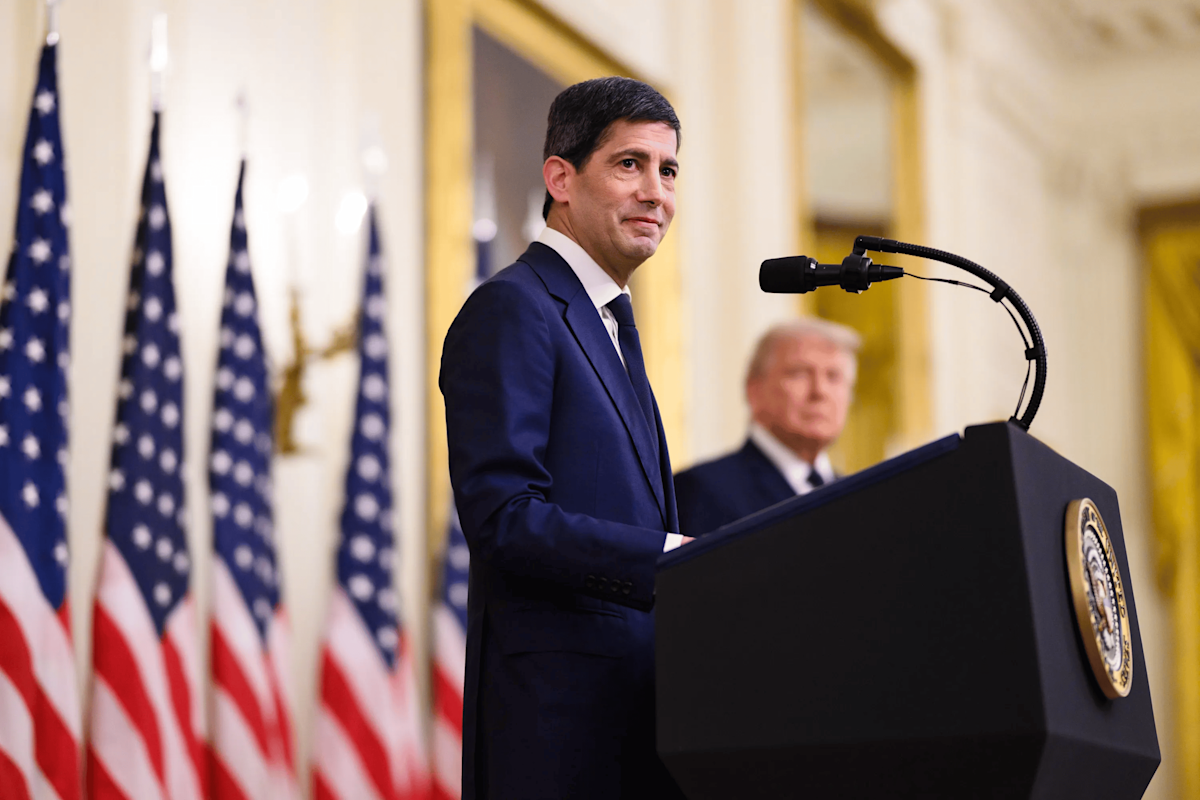
That appears to be happening with Federal Reserve Chair Kevin Warsh. When President Trump nominated him to lead the central bank, many investors immediately concluded lower interest rates were on the way. Critics warned he would simply deliver the White House’s preferred policy and supporters expected a more accommodative Fed.
Yet after Warsh’s first policy meeting, those expectations are being challenged. Betting markets have swung sharply, with Bloomberg columnist Conor Sen noting that traders are now pricing in a 35% to 40% chance of a July rate hike and concluding, “Warsh fooled Trump.” Whether that prediction proves correct is less important than what the shift reveals: investors may have misunderstood Warsh from the start.
The Assumption Was Always Too Simple
Many of Warsh’s critics argued his appointment would undermine the Federal Reserve’s independence. The expectation was that he would serve as a rubber stamp for the White House’s preferred policy of lower interest rates.
Yet a closer examination of Warsh’s record never fully supported that conclusion. During his confirmation hearings, Warsh repeatedly emphasized preserving the Fed’s institutional credibility and independence. He argued that public trust in the central bank depends on policymakers making decisions based on economic conditions rather than political pressure.
That position is consistent with his earlier tenure as a Fed governor during the 2008 financial crisis. While Warsh has often criticized certain Fed policies, particularly large-scale balance sheet expansion and excessive market signaling, he has never suggested the central bank should surrender its independence.
Don’t wait: the analyst who called NVIDIA in 2010 just revealed his top 10 AI stocks. See the full list FREE now.
Since his appointment, Warsh appears willing to chart his own course.
The most notable shift under Warsh may not be interest rates themselves but how the Fed communicates.
For years, investors became accustomed to extensive forward guidance. Fed officials often signaled future policy moves months in advance, allowing markets to adjust gradually. Warsh appears less interested in that approach.
Instead of offering detailed road maps, he emphasized responding to incoming economic data. That creates more uncertainty in the short term, but it may also restore some flexibility to monetary policy.
So far, inflation remains a concern. Energy prices surged after the conflict between Iran and the U.S. threatened global oil supplies. Betting markets quickly moved from expecting rate cuts to pricing in possible rate hikes as investors worried inflation would reaccelerate. Then came the ceasefire agreement, and rate hike expectations eased. Markets briefly settled.
Now, though, those expectations are climbing again.
The policy outlook has become a moving target, but Warsh’s willingness to keep all options on the table suggests he remains focused on the Fed’s dual mandate: maintaining price stability while supporting a healthy labor market.
Betting Markets Keep Swinging
The past several months have provided a useful lesson about prediction markets.
Since Warsh’s nomination, betting markets have swung from heavily favoring rate cuts, to forecasting hikes during the Middle East conflict, back toward steady rates after tensions eased, and now toward renewed tightening risks.
Those shifts reflect changing headlines, but they also reveal the limits of crowd forecasting. The “wisdom of crowds” can work when participants independently evaluate available information. Once money and emotion enter the equation, however, crowd behavior can become less about wisdom and more about momentum.
Prediction markets remain useful because they provide a real-time snapshot of investor sentiment. They should not be dismissed. But neither should they be treated as investment road maps.
In many cases, they tell us more about what traders feel today than what will actually happen tomorrow.
Key Takeaway
In short, Warsh is proving harder to categorize than either supporters or critics expected. Markets increasingly believe he is willing to raise rates if inflation requires it, regardless of who appointed him.
That doesn’t mean a July rate hike is coming. It means uncertainty remains elevated and the Fed is keeping its options open.
For investors, the larger lesson may be that betting markets are best used as one data point among many. Regardless of how loudly a prediction market speaks, investment decisions should still rest on economic data, corporate fundamentals, and long-term goals — not on whichever wager happens to be attracting the most attention this week.
Don’t wait: the analyst who called NVIDIA in 2010 just revealed his top 10 AI stocks. See the full list FREE now.