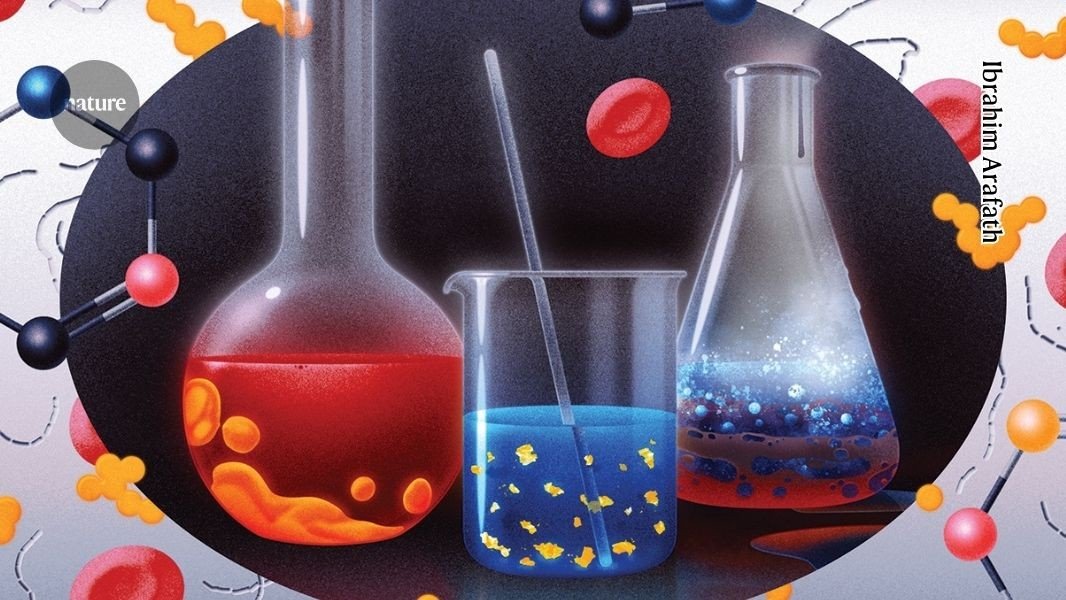

Gynaecological disorders such as endometriosis could be studied using endometrium organoids.Credit: fizkes/Shutterstock
Researchers have developed organoids that can regenerate like the endometrium, the lining of the uterus that sheds and re-forms during the menstrual cycle. The team used the miniature 3D structures to simulate rarely seen repair processes, which could inform future therapeutic strategies for tissue renewal and wound healing. The findings were published in Cell Stem Cell on 28 April1.
The endometrium has a unique ability to repair itself after menstrual shedding without scarring, but how it does this is a mystery. Until this study, it had been difficult to replicate the activity in the laboratory and studying it in people is too invasive, says co-author Konstantina Nikolakopoulou, a molecular biologist who did the research while at the Friedrich Miescher Institute for Biomedical Research in Basel, Switzerland.
“It is fantastic to have a model system that you can do experiments on,” says Deena Emera, an evolutionary biologist at the Buck Institute for Research on Aging in Novato, California. Insights about endometrium repair will not only help scientists to improve understanding of gynaecological diseases such as endometriosis, but also could be relevant to regeneration research in other tissues.
Lab-grown tissue
Nikolakopoulou’s organoids were developed on the basis of models that her former supervisor created in 20172. For those models, the researchers took a biopsy from a person’s endometrium, separated the cell types and mixed only the epithelial cells — the tissue cells in the endometrium — with a gelatinous membrane. This enabled the cells to self-organize into a hollow, spherical structure that acted like the endometrium.
Nikolakopoulou and her team took the model to the next level by emulating the menstrual cycle in its cells. First, they treated the organoids with oestrogen and progesterone, hormones that signal the transition of menstrual phases. The team then withdrew the hormones, which happens naturally at this point in the cycle owing to activity in the ovaries. In people, the reduction of progesterone causes shedding of the endometrium, or menstruation. The type of cells that trigger shedding were not in the organoid, which meant that the team had to mechanically break down the tissue with a pipette to simulate degeneration. They then watched as it regenerated, just like in a human endometrium.
Nikolakopoulou says the organoids are simple and contain only epithelial cells rather than an entire microenvironment of various cell types, such as immune, stromal and endothelial cells, and components such as oxygen and blood. It’s best to first understand how to “break down the puzzle, and then start increasing complexity”, she says.
Luminal helpers
Past research in primates3 has suggested that deep-tissue stem cells are responsible for the renewal of the endometrium.
But when Nikolakopoulou and her colleagues analysed the tissue that the organoids shed, they saw that luminal cells, another type of epithelial cell, were involved. Located at the surface of the endometrium, these cells help embryos to implant in the endometrium before pregnancy.