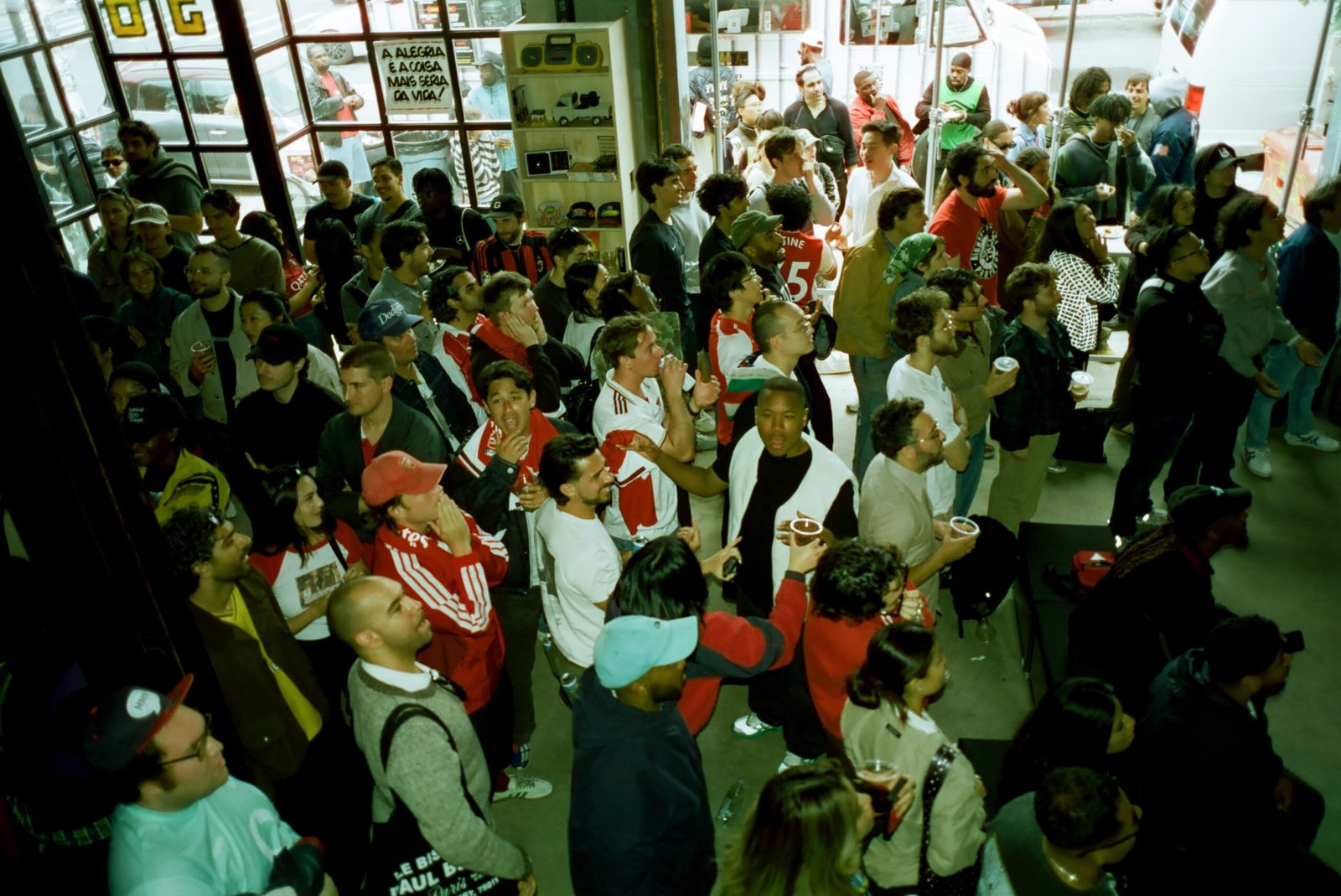
“Welcome to Le Pére, the home of not just slacks for demonic 25-year-old twinks, but also spirited literary philosophical debate,” the author, illustrator, rare genuine baseball agnostic, and, for a night, debate moderator Mattie Lubchansky said, addressing a packed house on the Lower East Side. We have gathered, at this “elevated menswear” boutique on Orchard Street, to once and for all hash out the 64-year-old rivalry between New York City’s two surviving outer borough baseball teams.
The event, streamed live by the free, 24/7 platform New York Television, is capitalizing on the release of author A.M. Gittlitz’s Metropolitans: New York Baseball, Class Struggle, and the People’s Team, as well as the recently revived Twitter discourse over who “Real New Yorkers” support, which has been raging off and on for nearly two years. The debate is split into two sides: representing the Mets is Gittlitz and Tipping Pitches podcast host Bobby Wagner; opposing them are the Yankees, represented by our own Jayson Buford, Wall Street Journal culture reporter Kevin T. Dugan, and New York Magazine’s Simon van Zuylen-Wood.
“Most New Yorkers, when it comes to sports, pick a side. The Knicks hate the Nets, the Giants and the Jets fans, the Rangers and the Islanders and the Devils, but nobody hates each other more than the fans of the Yankees and the Mets,” Lubchansky said in her opening statement. “What is a real New Yorker? When we say that, who do you imagine? Is it a slick Wall Street trader on the 4 train? A working-class immigrant or someone from the ‘laptop class’ on the 7? What defines the character of a real New Yorker?”
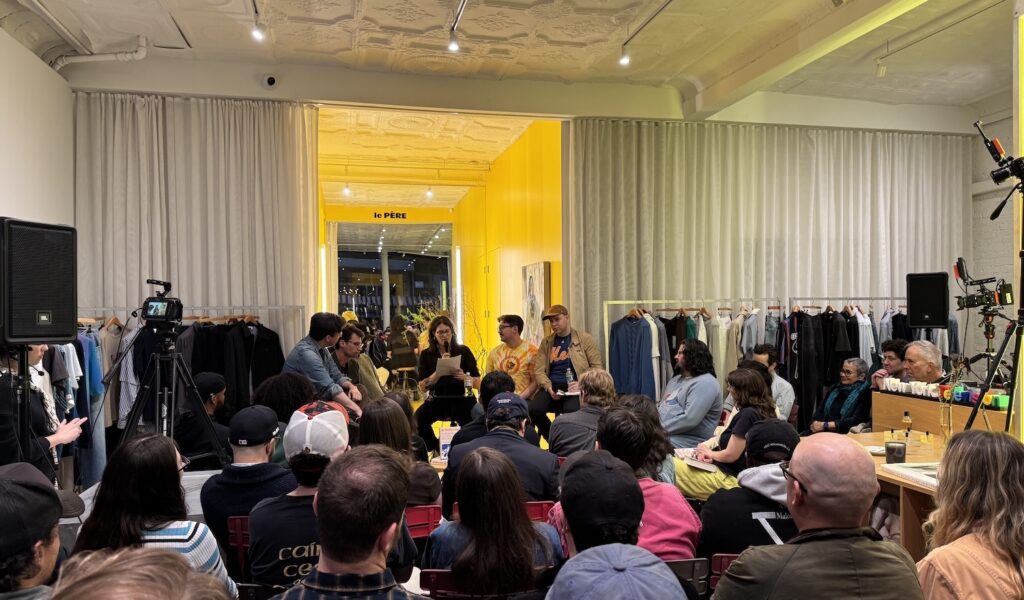
Photo by Ajee Boone
Transplant discourse and very silly and arbitrary questions of what a “New Yorker” is, and who qualifies as one, is a reliable engagement driver on social media, so it was perhaps inevitable this inquisition would eventually bleed into sports. At the heart of the question, and the evening, is which of New York’s two baseball teams best represents this city and its people. The debate teams offered two stark visions of what New York is, what it means, and who it belongs to.
The easy, lazy, decades-old New York baseball dynamic presents the Yankees as the aristocratic big brother—America’s team, the front-running Evil Empire, while the Mets have played the role of scrappy perennial upstarts, loveable losers who occasionally brush transcendence, and thus have been presented, by conventional wisdom and now Gittlitz’s book, as the people’s authentic choice. Because who in their right mind would sign up for the Mets’ historical ineptitude (currently 70-87 in their rivalry with the Yankees) with two World Series rings against the Yankees’ 27.
But during the Yankees v. Dodgers World Series in 2024, Dugan and van Zuylen-Wood penned a brilliantly provocation I was truly jealous of in New York Magazine: That the Mets are the official team of “the gentrifier class: media elites, political staffers, lawyers for good causes, Brooklyn transplants, Twitter addicts,” because they flatter the taste newly minted fans project onto them as gritty, diverse, eternal underdogs, an embodiment of the city they want to live in. “During ‘The OMG Season,’ there were purple mascots and the Mets were in a good mood, and we were looking around the office where [Dugan and I] both worked at the time, and it was awful. We were so outnumbered, both of us were truly impressed. And it was a lot of fairweather fans, but also a lot of transplanted fans, so we started formulating our argument,” van Zuylen-Woods said, explaining the genesis of the piece to the crowd.
Their article posited it’s, in fact, the Yankees—with their home in the Bronx, and their history of clean-shaven dominance—New York’s true working class of migrants (and I don’t mean from the Midwest) and their children have always gravitated towards with an entirely different set of projections, an embodiment of aspirational American achievement. “The crux of our argument is this: The reason that there’s so many transplanted Mets fans, the reason that a lot of people that live in the Midwest, or the West choose the Mets… is that the Yankees seem too capitalistic, maybe fascistic,” van Zuylen-Wood says.
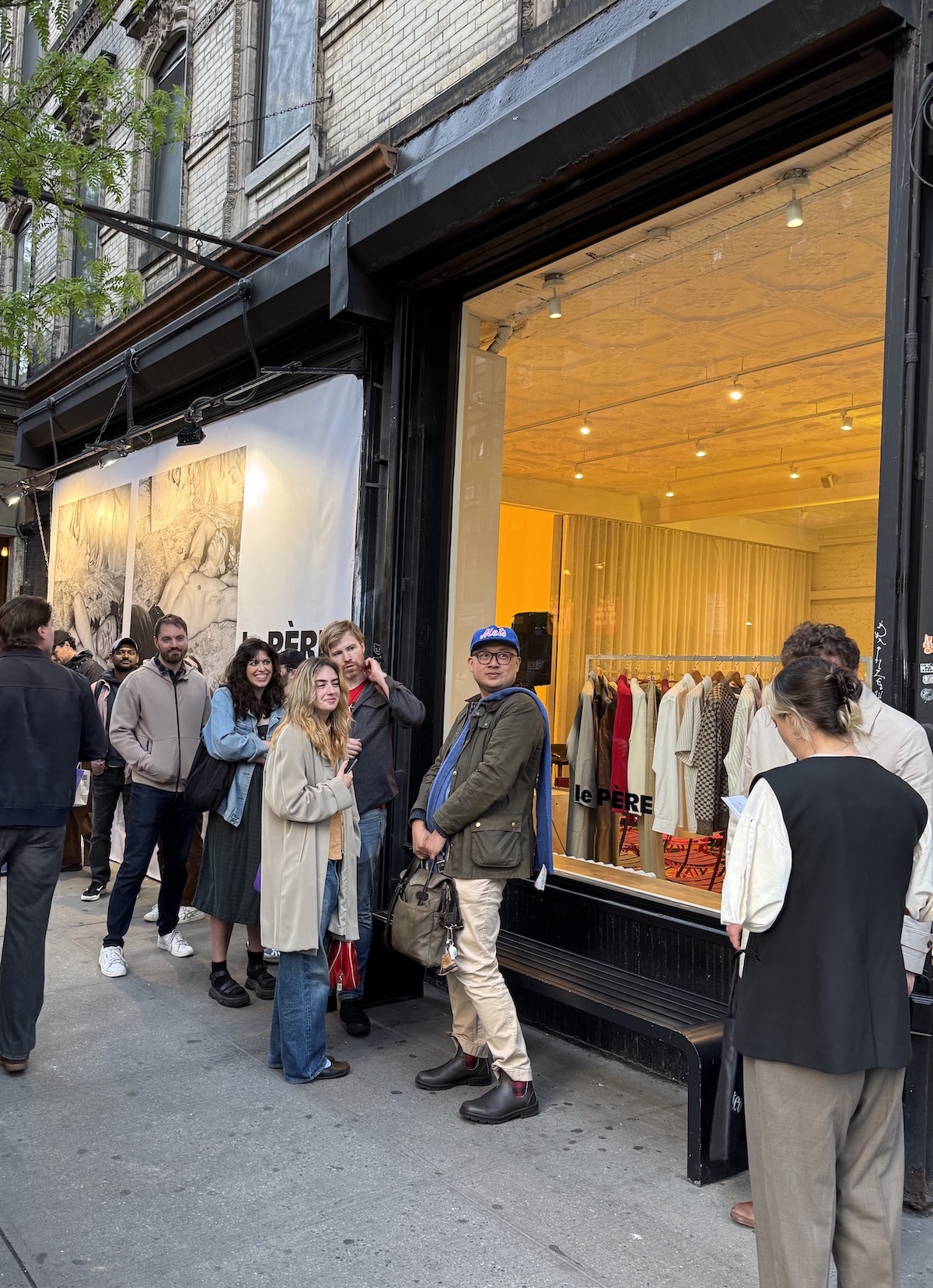
Photo by Ajee Boone
He defines “Real New Yorkers” as “Alpha energy, a swagger, a design to dominate, to be on top. Why would you think a true New Yorker would like being a loser?” The Mets, on the other hand, “are already winners in life. They are lawyers, they are successful bankers, and they’re so neurotic about it they have to attach themselves to these losers in order to sublimate their own self-hatred.” It’s why van Zuylen-Wood and Dugan’s piece was so subversive and brilliant, locating the most annoying tendencies of the privileged, eagerly and downwardly mobile leftist Mets fan, equating ineptitude with virtue. As Buford put it, in one of many grenades he lobbed into the debate throughout the evening, “You must really dislike the working class if you were to say that the Mets are the working class team.”
For the Mets contingent, Gittlitz was the clubhouse leader in minutes on the mic for the evening. The self-proclaimed former captain of the Yorktown High School Lincoln Douglas debate team—who Gittlitz confesses were “The Mets of the Westchester debate circuit”—is bone dry with tremendous comedic timing, and knows precisely how funny it is to dredge up esoteric Theodor Adorno quotes in the middle of a debate concerning multi-billion dollar sports franchises in front of the creative class gentry in a boutique on Orchard and Broome.
There is a natural inclination to affix villain mythology to a rival tribe, evident in everything from sports to celebrity gossip to war. This is especially true in the case of Mets vs. Yankees fans, and true of the debate teams on this particular evening. Gittlitz defines the Yankees as “A luxury brand: Balenciaga, Carbone. The Mets are a hip off-beat brand like Two Boots Pizza or Carhartt,” an act of channeling Gilded Age class tension into a sports rivalry. “This is why the bleacher creatures love the boss, and watch baseball from the perspective of society’s bosses by, for example, initiating corporatist roll calls, demanding players’ acknowledgments, and frequently calling to fire any player who doesn’t live up to their physical potential,” Gittlitz says. “[Mets fans] understand losing….We hate the Yankees, not because we think their fans aren’t somehow ‘real New Yorkers’, but because they’ve long represented themselves as stand-ins for the ruling class.”
This was the agreed upon presentation of both fanbases: That the Yankees base is comprised institutional Trumpian Fascists, soulless corporate raiders writing up their players for not hitting performance goals—the most annoying kids in your millennial high school who also rooted for the Bulls and the Cowboys—while the Mets base is composed of egalitarian proles who not only accept but embrace their lot in life as fans. “Mets fans are in a way relieved Steve Cohen’s stated aspiration of turning the Mets into the Dodgers or the Yankees has so far failed because we want a victory for the people. We don’t just want another banal World Series win every few years… That’s why we find such profound meaning, not only in our dismal stretches, but in our hope for a true victory that cannot come annually, but instead must be nothing short of an October revolution,” Gittltiz said at one point, which is clever and resonant purple prose, but is complete bullshit cope and entirely out of touch with your average Mets fan who lives and dies with the team and wants to win it all every year and doesn’t give a shit about Gittlitz’s “communalist vision” of the franchise (There were convenient tongue-in-cheek arguments on both sides, but Gittlitz in particular, ascribing working class principles to a team owned by the 30th richest American participating in an oligarchal entertainment, had to perform Olympic levels of contortion at times throughout the debate to hold his thesis).
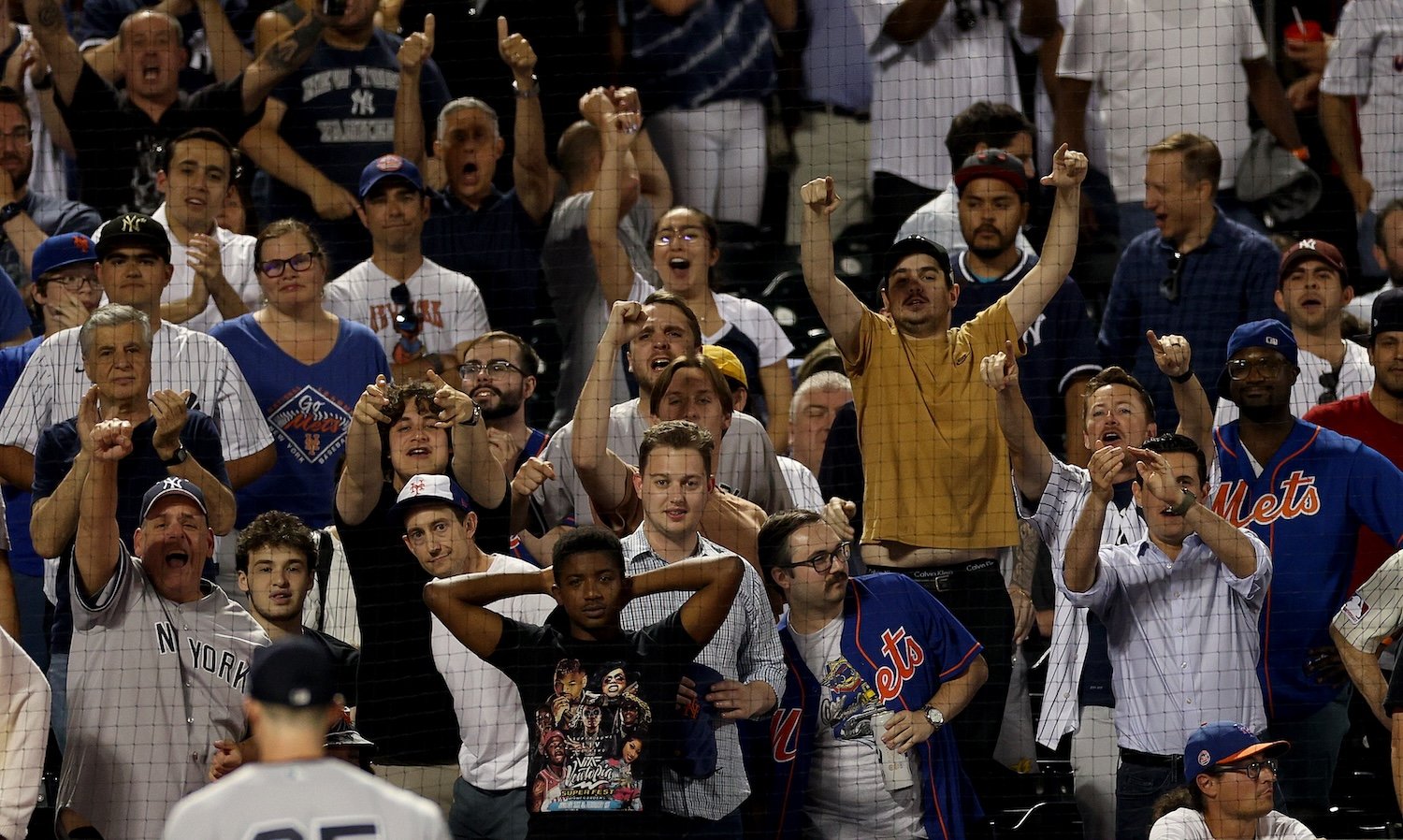
From a competitive debate perspective, this was the failure of the evening. The Yankees contingent ceded this ground and didn’t bother to challenge that essential composition of Mets fandom. In Flushing, any random night this summer, you can pull up to a Mets game and find a sea of conservative white grievance packing the parking lot with SUVs from the suburban reaches of Queens and Long Island, who will sit jeering another season of mediocrity, taking a break only to scream for “Piano Man” in the eighth inning. They want a Shack Dog and an $18 Miller High Life deuce and a fucking parade down the Canyon of Heroes in November; as many as possible, as all fans do in their lizard brains and greedy hearts. Neither stereotype fits the wildly diverse, enormous fanbases of two franchises based in the South Bronx and Flushing. Neither hater of either fanbase, nor the debate teams, are particularly concerned with the inconvenient bleacher creature, or the Kevin James-looking douchebag in Mets garb, that disproves their blanket prejudice. And that’s fine. In New York, this is the way, and if you’re a true sicko, it’s fun.
As I observed the scrum from my folding chair, it occurred to me that of the many aspersions I have cast towards Mets fans over my many years as a Yankee supporter, I’d never questioned their identities as New Yorkers (a question I feel qualified to ask as the exceedingly rare Yankees/Jets fan not afraid to bleed for my teams). And the absurdity of the thought exercise revealed itself to me.
Photo by Justin Casterline via Getty Images
The Yankees and Mets have never been closer in constitution, philosophy, or on-field output, which is what makes the timing so odd for an inflection point in the rivalry to spur existential questions about what both represent to New York.
The Mets currently have the second-highest payroll in baseball, the Yankees the sixth. Both teams clear $250 million and sit at least $100 million below the dominant, seemingly invulnerable Los Angeles Dodgers. Even before the Dodgers made themselves into Yankees-style bloated behemoths in the 2020s, the Bombers have been perennial playoff fixtures who swoon each fall—for a number of factors, including “luck,” being outclassed by their competition, and however you classify what happened with the Houston Astros—winning a single pennant a quarter into the century. If they don’t win a championship this year, they will tie the longest drought without a ring in franchise history.
The Mets have had less postseason success, but as of 2020, have the richest owner in baseball. Team spending has ballooned, but the Mets have hovered in the top 10 for decades, reaching the occasional League Championship or World Series but falling short. The embittered Mets fan will surely point to how frequently the Yankees have achieved regular season success and deeper postseason runs, somehow reaching the playoffs only six times since the year 2000, while the Yankees have only missed the playoffs five times in the same span (jaded Yankee fans will clarify there is a special kind of hell in this regular, mostly good, but never great, result).
It is the Yankees that now have the Mom & Pop shop, with a second generation of Steinbrenner ownership that inherited the team and doesn’t have a hedge fund to divide their attention. Despite being valued as the most profitable franchise in baseball, ownership has made it clear that “good enough” is good enough, displaying a level of complacency in management, from front office to the field, showing no interest in chasing the Dodgers’ eye-popping overhead, which has surely caused George Steinbrenner, who bought the team in 1973, to spin in his grave every fall and subsequent, mediocre offseason.
None of this dreary history is particularly “fun” (for anyone except… the fans), because it doesn’t have the magnet hook sex appeal of an impossibly subjective declaration designed to piss off one side of the aisle or the other, and maybe that’s the point.
What we can productively take from this exhausting discourse is that:
A: The idea of any one corporate entity being a container for identity and values and politics and hopes and dreams is foolhardy.
And, of course, B: Moving to a city and adopting their sports allegiances is abject loser shit.
As the proceedings came to a close, Lubchansky polled the crowd, asking for applause to decide who had ultimately won the debate for the soul of New York baseball. To the surprise of no one, the audience sided overwhelmingly with the Mets.
The post Yankees or Mets? Inside The Ideological Battle for The Soul of New York Baseball. appeared first on BKMAG.