Open Kitchen is a monthly interview column covering the joys and frustrations of Brooklyn restaurant operation in all its many forms.
Every restaurant is an extension of its creator—their passions, their curiosities, their taste, their sense of humor—but this is more true of some establishments than others. Some are utilitarian, filling a void by bringing weeknight Thai or ramen to a neighborhood that doesn’t have a local option. Or perhaps it’s a lark, a chef obsessed with Chicago dogs for no reason beyond loving them, quixotically staking hundreds and thousands of dollars and several years of their lives to nail it to the door of the chapel. But my favorite restaurants are the places where stepping inside is like entering the headspace, or the chest cavity, of its chef/owner—deeply personal autobiographies that come in the form of a hospitality business.
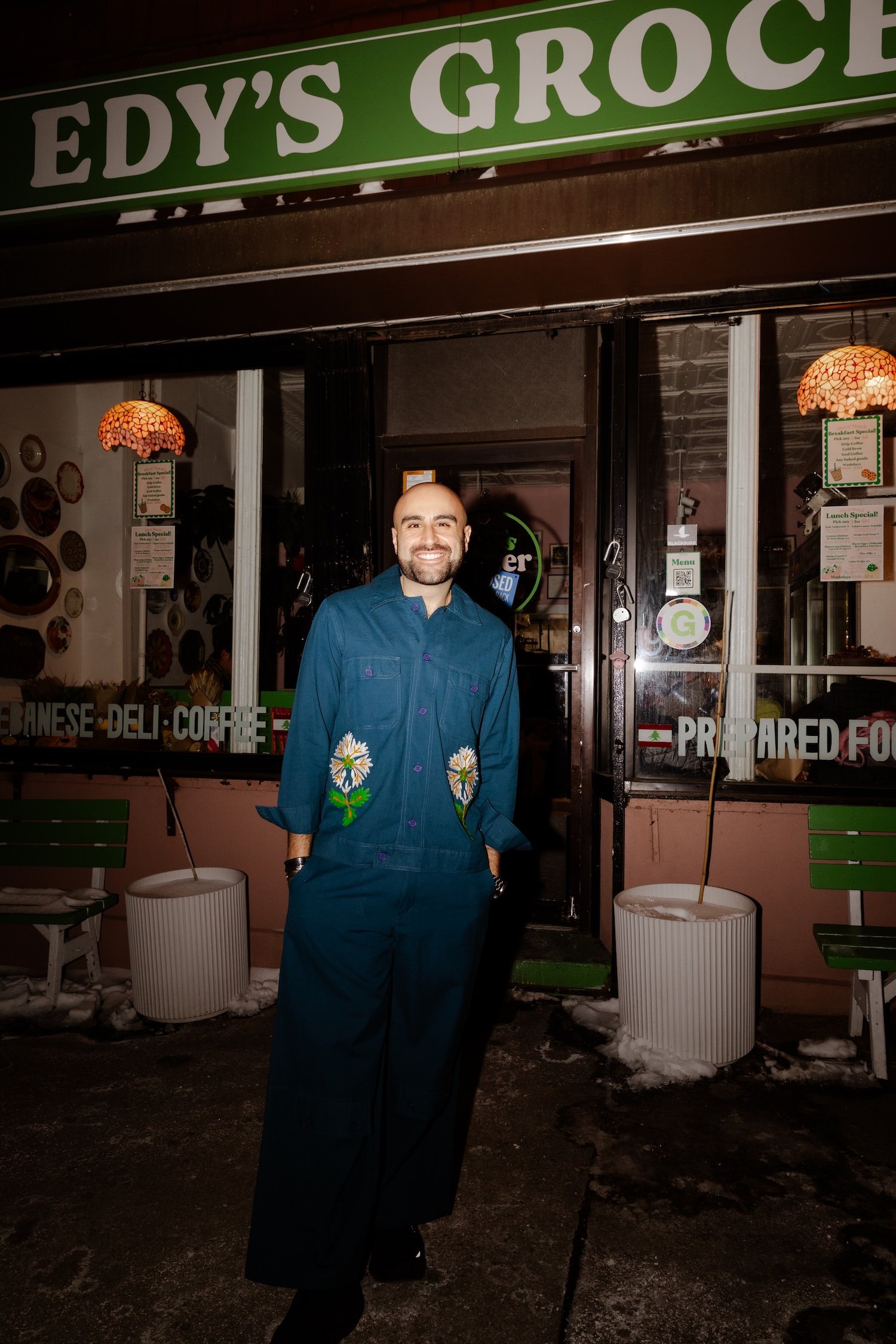
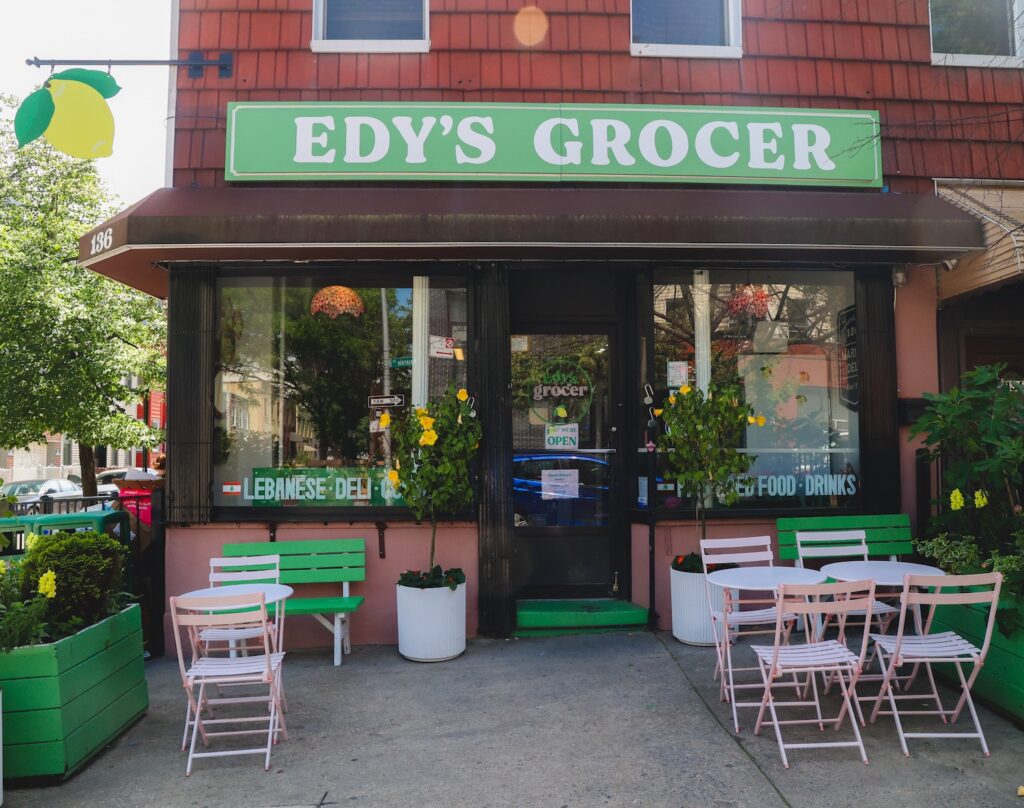
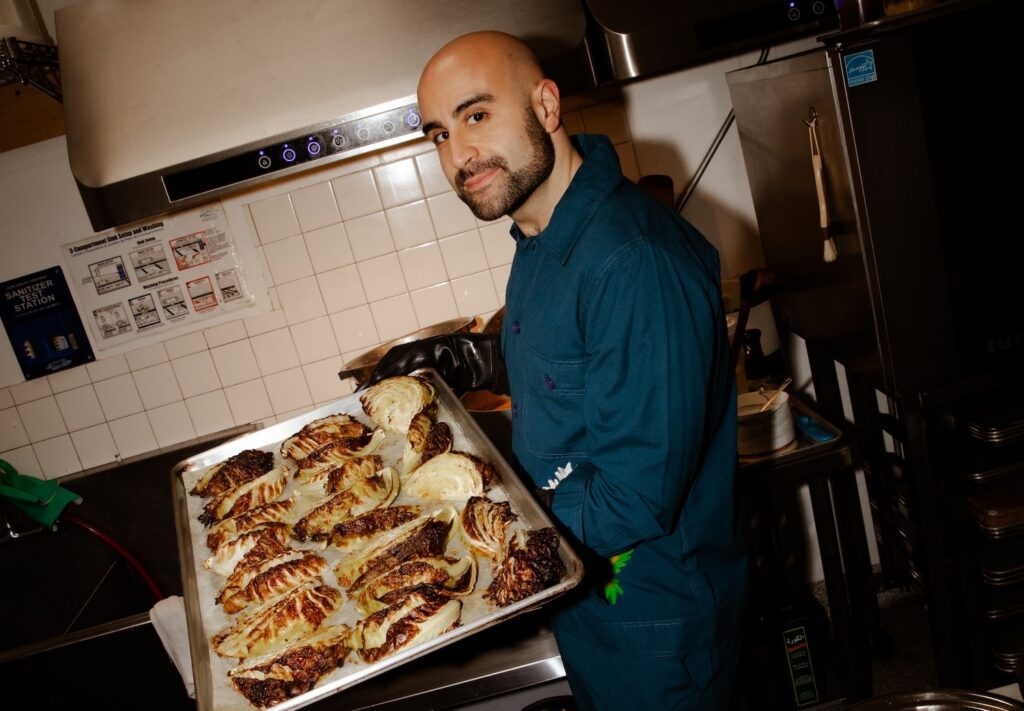
One such establishment is Edy’s Grocer, in the far northern reaches of Greenpoint, at the center of a maze of cramped, double-parked, single-lane, one-way roads, amidst butchers and fishmongers that feels more like a neighborhood in Warsaw than steps from the Pulaski Bridge at the border of Brooklyn and Long Island City. It’s a sandwich shop, an appetizing store, a Middle Eastern vision of a miniature Trader Joe’s, the best bodega in Beirut. It serves as an intimate, pastel-coated conversation with its curator, chef, and single parent Edouard Massih.
The 31-year-old who goes by Edy grew up in Anfeh, a coastal village an hour north of Beirut, described in his excellent narrative cookbook Keep It Zesty as something like a cross between the mythical island where Wonder Woman was raised and the Sicilian hamlet Michael Corleone hid out in after killing that police captain, translated to Arabic. His family is half Syrian, half Lebanese and Christian, and he experienced the best of both food cultures hanging off the hems of his two Tetas around meal times, helping them prep, mainly to be paid in snacks. Things took a turn when, at the age of 10, Edy’s parents decided to move their family to the suburbs of Boston, a place Edy describes as less than ideal for a young, gay Lebanese kid who couldn’t speak English in the immediate wake of 9/11 and the wave of fervent, jingoistic W. Bush-era bloodlust it inspired. The kid who was bullied mercilessly made friends with American television, where the bullying was reinforced by a media apparatus that taught him his culture was backwards, and wrong, and for a time, Edy took this lesson to heart.
At the Culinary Institute of America upstate, with a few years and some distance from Boston’s oppressively white, heteronormative monoculture, Edy reacquired his love for his identity. When his instructors presumed to teach him what constituted, at the time, as a primer in Mediterranean food, which left out Lebanon’s sophisticated, metropolitan, blended cuisine, Edy pushed back and demanded recognition of his culture. In New York, he quickly decided traditional restaurant cooking wasn’t for him, but catering—and the hosting that reminded him of a big family sitting around a table laden with an infinite array of beautifully plated breads and dips—was. Edy made his bones preparing feasts for weddings, private cheffing in the Hamptons, and building his Greenpoint community with an inventive monthly Lebanese supper club series that became an impossible ticket. In the midst of COVID, Edy propositioned his neighbor, the proprietor of a beloved Polish deli, to turn the business over to him, as they’d occasionally discussed as a kind of someday, pie in the sky hypothetical. To his surprise, she said yes—and The Grocer was born.
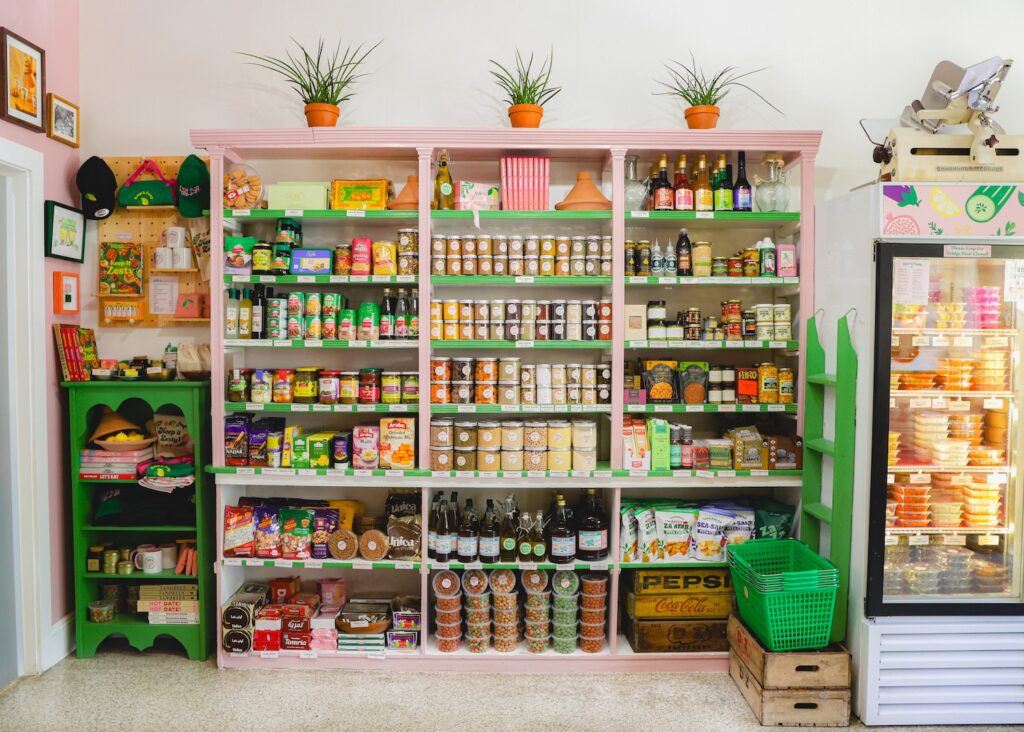
Six years later, Edy’s Grocer serves as the headquarters for Edy Inc. He’s a tireless, brilliant promoter of a brand that includes his book, television appearances, food content on his social media accounts, catering gigs, and collaboration dinners (still a unbookable hit). Of course, there’s also the store itself, a masterclass in branding that looks like a shop on Sesame Street got remodeled by the Easter bunny. It’s full of Edy’s spins on traditional Arabic mezze, as well as an exquisitely curated pantry of imported sauces, cheeses, oils and vinegars—all powerful, sensorial reminders of where his unique culinary journey began, and why establishments like Edy’s are so vitally important.
Recent horrors in Lebanon have put tremendous stress and pressure on all Arab New Yorkers. In response, Edy has used his platform to speak out, fundraise, and provide a haven for his Lebanese neighbors who want the comfort of their culture here, as they can do little else but stand by and watch it under attack by nefarious imperialist forces back home.
Before reaching out to Edy for this column, I went to Greenpoint and, with the help of an exceedingly polite and knowledgeable counter person, brought home a spread for a leisurely meal of dips laid out on the dining room table that my wife, my kids and I picked at throughout the day. There was a stack of fluffy pitas from nearby Damascus bakery, crunchy and tangy house-made Beirut jardinere, a “bagel,” or ring of sesame-dipped kayak, served with an everything salmon dip worthy of Russ & Daughters, and a perfectly balanced, spicy, sweet, and creamy feta fig jam, among many other snacks.
My son happily, quietly munched on a fried, intensely lemony meat cigarillo as my daughter peppered my wife and I with questions regarding dukka seeds, interpretations of muhammara, and the subtle differences between Edy’s cuisine and the food her Teta makes for her when she comes to visit.
These are the two appropriate ways to engage with Edy’s wonderful store: as a resource of cultural education, and simply, a dope lunch spot.
(This interview has been edited and condensed to make me sound like less of an asshole)
Courtesy of Edy’s Grocer
How’s your family doing?
My family’s doing ok. We are from up north, outside of the city, so thankfully, they are away from everything that’s happening right now, but they’re still feeling the impact. Lebanon is very, very small. It’s smaller than Massachusetts. So when 100,000 people are displaced, there’s no place for them to really go, they’ve been scattered all over the country, so they’ve seen an influx of people up north as well. And so it’s… yeah, it’s a lot. It’s very sad. I was actually supposed to be there now, for Easter, and, of course, I couldn’t be there.
Well, tough to transition to anything else, but I hope everyone continues to do well and I hope you can make it over there soon.
One note in your book that was an instantly recognizable laugh line was how your Syrian grandfather calls mezze, as a meal, “lazy.” In your blended Lebanese and Syrian family, were there any friendly or maybe not always friendly cross culture rivalries?
There was always the little competitions between, like, Lebanese Zatar and Syrian Zatar. Especially when it came to Aleppo food—those tend to always be spicier. That was always a “No” for my grandmother from Lebanon. She would always be like, I don’t do spicy. She didn’t really care that much, but it was more of a rivalry thing, so we wouldn’t serve the Syrian version of things.
Which of the mezze in the store is the most original?
I think the one that I’m most proud of would be the labne with chili crisp. It’s just a fun little twist. I love chili crisps, so I made a harisa chili crisp with Aleppo pepper and nigella seeds and cumin seeds. And the labne is so spicy and tangy with the crisp on top. It is honestly one of my favorite dips that we have. It’s very different and it’s really good.
What’s your approach to R & D and trying new things?
I love to have fun with it. I’m always going out to eat for research, I love to travel and all that stuff. I post eight to ten different recipes a month where I’m just experimenting with different things.
I host a dinner series here at the grocery every month. We do a different dinner with a different chef and it’s normally, like, Swedish Lebanese, and next month is going to be Japanese Lebanese. Every month we do a different dinner with a different chef from a different culture, and I love mashing our worlds together. Some people are so against fusion, and I get that, I completely get that, but I think for me, as a chef, I’m bored of cooking the same food all the time. Doing those dinners and experimenting gets me really excited, and I think that’s kind of the funnest part of the whole job.
Are there any chefs or authors who are particularly inspirational or influential for you?
I think the internet is so vast nowadays, and there’s so many people out there, and there’s so many influencers and chefs; I don’t think there’s anybody that I could point to and be like, That’s the one.
Of course, I’m a huge Martha Stewart fan, but she’s not the only person, and also her recipes are not really that fun anymore. They’re basics. They’re good basics, and I think what she does when it comes to hosting is really great. But I think in general, it’s the world. I’m just always scrolling, I’m always going out to eat, I’m always traveling, and I’m always looking to taste what’s out there and see what people are doing. I especially do that when I go back to Lebanon. I find that there’s so much good food in Lebanon, and they’re always doing the coolest things at the restaurants in Beirut, so I like to go and taste and bring it back with me.
I love “The internet” as an answer. That’s more honest than a lot of chefs are willing to be, but I think many of your peers are very influenced by the scroll.
If chefs tell you they don’t scroll they’re lying. Chefs scroll all fucking day long. It’s like, that’s all they do. I don’t believe when chefs are like, “I don’t care about that stuff.” You do. Your feed is all food, and that’s what we do. It’s a really big part of who we are. Most chefs are less likely reading the New York Times. They don’t have the attention span, they don’t have the time and they don’t really care for it. So I think that it is a lot of what we see out there.
To me, Substack is this new world of reading different things and seeing what people are being inspired by, and I’m not saying I’m reading Substack all day, but I do look at that, and there’s all these outlets online now to use, rather than just picking up a book. I get so many cookbooks in the mail, always, all the time, all these new books coming out, and I never tend to go and pick one up for a recipe. I just end up searching for one on my phone. And I think obviously, that’s sad, especially as a cookbook author, but it is the world that we live in now.
I just started doing this series. I’m actually starting it in April. But it’s cooking my way through my cookbook shelves. And every month I’m gonna do two recipes from a different cookbook. And it’s a way for me to get back to the books that I never use.
I have over 300 cookbooks in my apartment, and I can’t tell you how many times I will be at a loss for where I’ve seen a recipe I want to make, and just end up aggregating and cobbling together shit I find on my phone instead of taking advantage of the $1000s of dollars I’ve invested into my library.
That’s what happens.
Courtesy of Edy’s Grocer
Of your many gifts as a chef, I think chief among them is branding, which includes everything from the packaging of your product, to the aesthetic you use to lay out your shelves in the store, to your persona online. How do you think about branding your products, and yourself?
Before I came out with the cookbook, I thought of myself as Edy’s Grocer: The Business. Then the cookbook came out and I went on tour and I tried to differentiate between the two and tried to have my identity and personality apart from my business, but that’s really hard to do when you’ve grown this baby from scratch. It becomes who you are and who you identify as. But I realized I’m also Edy Massih, the cookbook author. I have a lot more to give than just this cafe and grocery that I’m running. What I eventually realized is authenticity is huge, and you’ll hear that a lot, but I’m very authentic to my brand. The brand is me and I am the brand. So it goes very hand in hand.
When it comes to what defines the actual brand, “Keeping it Zesty,” lemons, pink, green, all those things? Those are just things that I just love. Even my home is pink and green. My bedroom has been pink for the 11 years that I’ve lived in New York. So it’s not like I came up with this for the store. They were embedded in me, it’s an extension of me, and I made the store part of who I am.
In your opinion, what’s the best way to tackle a meal entirely purchased from The Grocery?
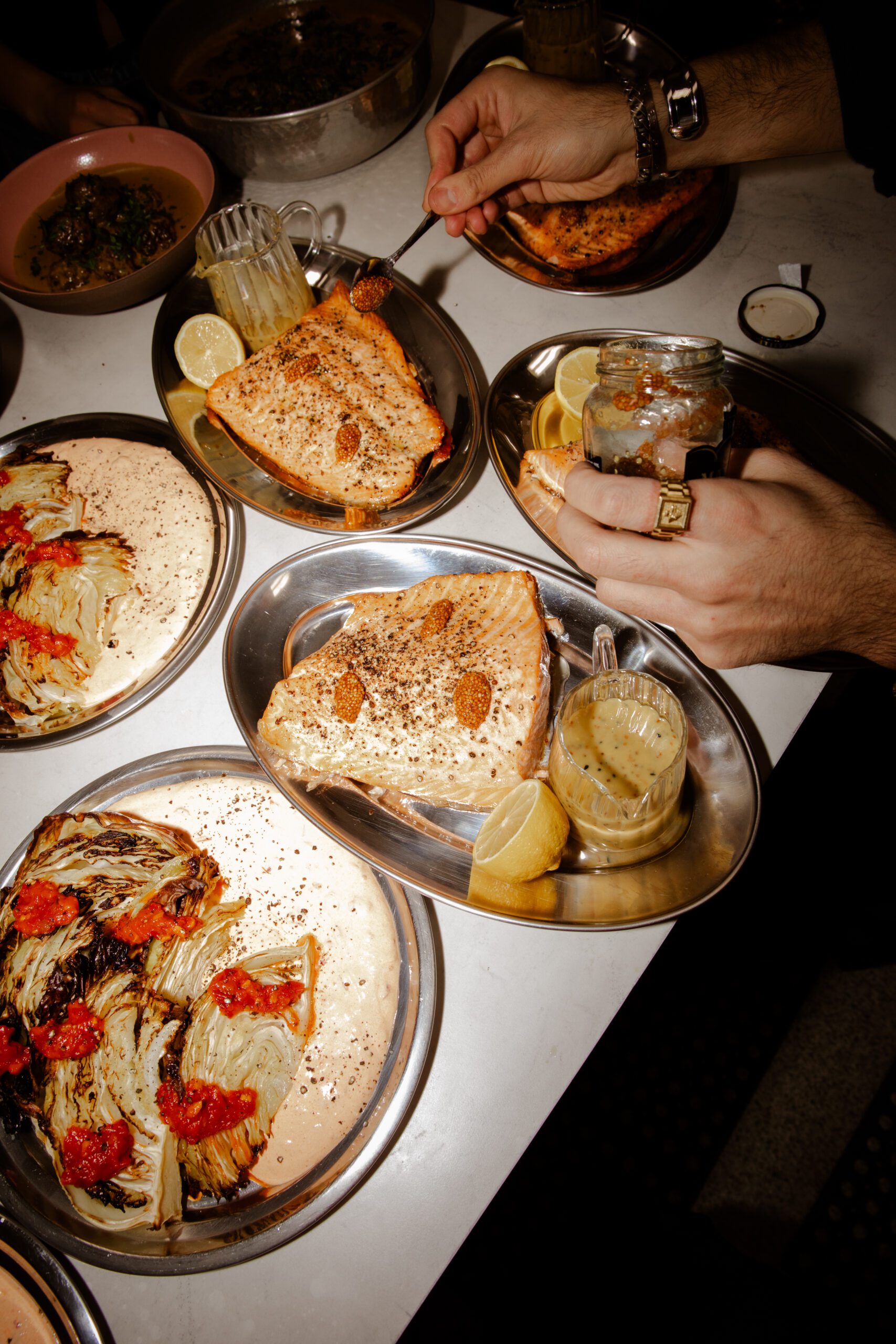
We have a lot of pre-made stuff, which is the great thing about The Grocery—it’s grab and go. So you can buy skewers, you can buy mezze, we have a deal that you can get five for $40, so you could buy five different dips and get some pita with that, warm up the pita and get like two salads. We have couscous salad, kale, taboule or the tahini Caesar, and put those out in bowls, warm up some skewers with some vermicelli rice, and there you have it–you’ve got yourself a beautiful meal. We’ve got lots of great desserts too. The brownie is pretty big, so you can chop it up into pieces and put those out with some baklava and you’ve got dessert.
It’s pretty clear that Boston was formative, in a not great way, as a place that introduced you to a certain type of American experience. Can you share some thoughts and reflections of Boston culture?
I think Boston is single-toned, especially the suburbs of Boston. So it’s just not cultured like New York is. It kind of speaks for itself in a way, which is so crazy to me because Massachusetts is such a liberal state.
I have found there are these weird pockets of America where people present as extremely conservative but vote liberal, for whatever reason. Still trying to get a handle on it.
The suburbs of Boston are very, very close-minded. And very racist, I would say, for the most part. And I think moving to America in 2004 was such a tricky time, post-9/11, as a Middle Eastern person. I don’t think America has gone any fucking better these days, but I just think it was so racist back then. It was like, “If you’re a Muslim, you’re a terrorist,” and there wasn’t much I could do to prove otherwise. That’s what the media brainwashed people to think. We didn’t have social media, like we do now, where you get to see both sides of each story, in theory, anyways.
It was hard to steer people to thinking you’re actually not a bad person or that you actually come from a very cultured place, way more cultured than the Boston suburbs. So, that’s obviously very difficult, when you don’t even speak the language and you can’t stand up for yourself. And I think there’s this mentality, like if you didn’t speak English, you’re just stupid or dumb or ignorant. American kids just think they’re the best in the world, which is so funny to me because now that I’m an adult, I think Americans are the most uncultured people, actually. So it’s just very, very funny. As you grow up, your eyes open up to things and I think that’s why I’ve fallen more and more in love with my own culture, even though our culture is still not very loved around the world. I do really believe in it and I believe in who we are and what we represent.
What was the turning point, when your eyes opened up to the beauty and dignity of your culture and when you were able to re-embrace it?
Courtesy of Edy’s Grocer
After a while, in the small town in Boston I lived in, Abercrombie and Fitch and Dave and Busters and The Disney Channel, and all these very American things became a way of life. I think as I grew up and left that bubble, when I went back to Lebanon and visited, I realized how horrible that bubble was. You realize what the American media is showing you is biased and ultimately, it’s corrupt. It shows you the perspective it wants to show you. So if it shows a kid a person, or people it wants that kid to hate, it will happen eventually. Then I just grew up, and I would go back to Lebanon and I would be like, “Wait, like, why don’t I like this? This is who I am. This is what I love, and there’s so much life to be lived here and people are so much nicer here and open and genuine.” So I think it was just traveling and maturing.
I really liked and appreciated this moment in your book where you challenge your teacher at the Culinary Institute of America on the representation of “Mediterranean Food” that doesn’t include your culture. There is a particularly dominant genre of “Mediterranean Food” in New York that currently takes credit for a lot of other culture’s cuisines and tries to cram it under one banner. How do you feel about that?
I hate it. There’s no light way to put that one. I absolutely hate it. It’s appropriation at its finest, but we live in New York City at the end of the day so, not much to say there, to be honest.
What I will say is I’m very proud to see how many more Lebanese, Middle Eastern, Syrian, places have opened up in the past six years. I think I was one of the first, and then after that, there was a wave of new places, and it makes me so proud, like Sawa, and Huda, and, Nabila’s, and there’s a Korean Lebanese place Syko. There’s all these amazing new spots that are now calling themselves Palestinian or Lebanese or Syrian or Jordanian or Yemeni, like Yemeni coffee is becoming bigger and bigger here and in Europe. So I am very proud of that, and I am hoping that this is the new wave.
It’s funny to me, because those other places that we were talking about, ultimately always call themselves Mediterranean, and that is when I know a place is not authentic.
I will say that it was once perceived as politically dicey in this city, and I’d guess in this country, for certain Arab establishments to brand their restaurant based on whatever culture or cuisine they represent, some more than others, and I think the current wave of restaurants now rejecting that concern is real progress I personally love to see.
But you posted something really beautiful a few weeks ago about how frustrated you were with people DMing you, about how they want you to speak out more about what’s happening in Lebanon. And I think this is an issue for all Arab-American celebrities. What pressure have you received from within your online community to be more vocal, balanced with the stresses of continuing to operate your business and live your life, while dealing with what I would imagine is the personal horror of seeing what’s happening back home?
The annoying thing about it all is, if I could post about it and the war would end, I would be posting about it every day. But that would never happen. And it’s like everybody now thinks they’re entitled to their opinion and their opinion is like the biggest deal. I’m not a politician. I am not a politician. I have nothing to do with politics. I don’t know anything about politics, to be honest. I’m just a chef trying to do my job every day. I’m trying to keep my shop open and trying to pay my employees every week. And so for me to go out there and put out statements and say all this stuff about this war, I just think it’s stupid.
These people that send me these DMs, it’s frustrating because you can never please them. This one girl DMd me, “So you’ll make money off of Lebanese food, but you won’t speak up for Lebanon.” And it’s like, I don’t know how to say this like nicely, but I’m fucking Lebanese. I was born and raised there. I’m not trying to fucking make money off of it. It is who I am and it is what I represent here in New York. I’m actually trying to shed a light on my culture, way more than other people do. People always forget what you’ve done, all these years of doing The Today Show and Rachel Ray and Drew Barrymore and all these different shows, publishing a cookbook, trying to shed a positive light on Lebanese culture and Lebanese food. It’s really crazy to me. They just forget it all when you don’t post enough about what’s currently happening.
And that, to me, is just fucked up because, as influencers, or people that have a voice on the internet, all I’m ever trying to do is shed a positive light on my culture. That’s what I’ve always tried to do, and that’s what I will always keep on doing because Lebanese people have always had a bad light cast on them in this country. Lebanon is always shown on TV here as a war-torn country. And what I’m always trying to do is prove that wrong and show that Lebanon is a gorgeous place full of culture, with amazing restaurants, and amazing parties, that’s what my home really is. So, for me to go and talk about the war or ReGram war videos constantly, and things like that, it would be contradicting what I’ve been doing all these years.
It will forever be hard to be in this position. And there’s no really easy way, or right way, or wrong way to go about this. Social media these days is an amazing place, but also people can just bully you and not really think about your feelings on the other end. You know, like when the war erupted again, this last month, I didn’t come into The Grocer for three days. I was just sad and depressed at home, but I’m not gonna post about that because I don’t want people to cry. I don’t want people to feel bad; I’m not trying to get that attention. But people don’t know what we are going through when we have family there, and when I have a trip booked to go see my family in Lebanon.
Courtesy of Edy’s Grocer
And it’s not like you’ve been silent about it either. You’ve made statements. You’ve said how you feel. You’re speaking very candidly right now when someone asks you direct questions about it. But it seems like for the worst faith trolls online, if you’re not posting your politics incessantly, people think that they don’t exist. And they ignore the many things that you have said and you have done and continue to do to support your community overseas and to raise awareness and attention for them.
I started the first-ever Lebanese food festival here in New York, in Union Square two years ago, and we did our second last year, and we’re doing the third in 2026. In 2025, we had more than 800 attendees, almost 900 attendees, and featured 24 different Lebanese slash Middle Eastern small businesses. We had a few Palestinian and Syrian ones. And I put this whole event together by myself every year, with no money coming in from outside, and I do this just for the love of my people and my country. But people wash that all down the drain, just for a fucking post, which is so, so annoying. That is how I believe you shed light on your culture and your people, not through reposting yet another building getting bombed in Beirut.
You show them your humanity, confront them with your humanity.
We end every interview by asking our subject if they’ve had any recent meals, sit-down or delivery, that they wanted to shout out.
I love LaRina in Fort Greene. Chef Sylvia. She’s fucking incredible. I love that place. I dream about that place sometimes. I’m also signed up to her lasagna club once a month. I bake it off with a salad and an appetizer and a dessert and it’s my favorite day of the month.
I love my breakfast burrito from Ursula—it’s so good, and it’s owned by a good friend of mine, Eric See. You’ll always catch me having a martini at Bernie’s. Since The Snail has opened, you’ll see me there a lot for brunch. I’m going to Syko next week. I do love a meal at Sawa forever and always. We’ve been talking about an event in May, because I do think it is some of the best Lebanese food in New York right now.
The post Open Kitchen: A Conversation with Edy Massih of Edy’s Grocer appeared first on BKMAG.