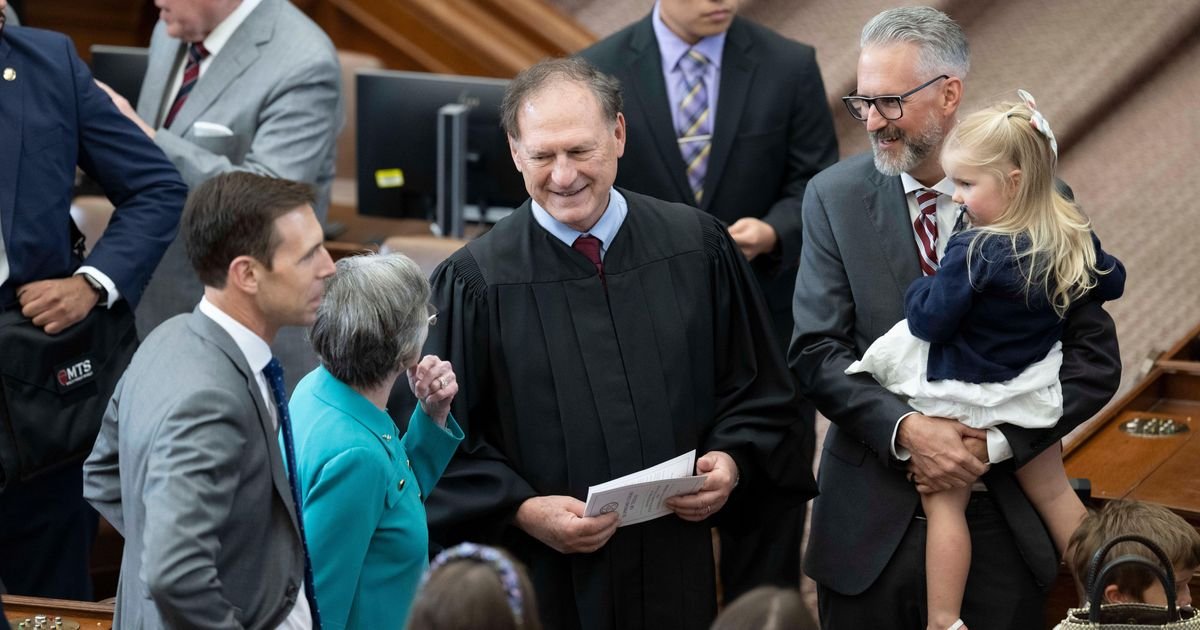

Alito could not wait to greenlight partisan gerrymanders all over the South.
Photo: Bob Daemmrich/Alamy Stock Photo
Hundreds, maybe thousands, of legal beagles and political junkies anxiously awaited the U.S. Supreme Court decision in Louisiana v. Callais from the moment oral arguments concluded last October. A long train of decisions by the Roberts Court made it obvious that the moment might have arrived for a thorough gutting of the Voting Rights Act, at least as it pertained to minority-voter representation in legislative bodies via redistricting decisions. But as days and weeks and months went by without a decision, fears that the Court would drop a hammer on the 2026 midterms steadily abated.
By late April, the midterms were formally underway in most states, including in the southern region where VRA-based decisions were most significant. Even in states like South Carolina and Tennessee, which have relatively late primaries, candidate filing deadlines had come and gone. And in a number of recent decisions on election-related legal issues, the Court had placed great stock on the so-called Purcell principle, according to which courts should avoid doing anything to affect elections when actual voting is near.
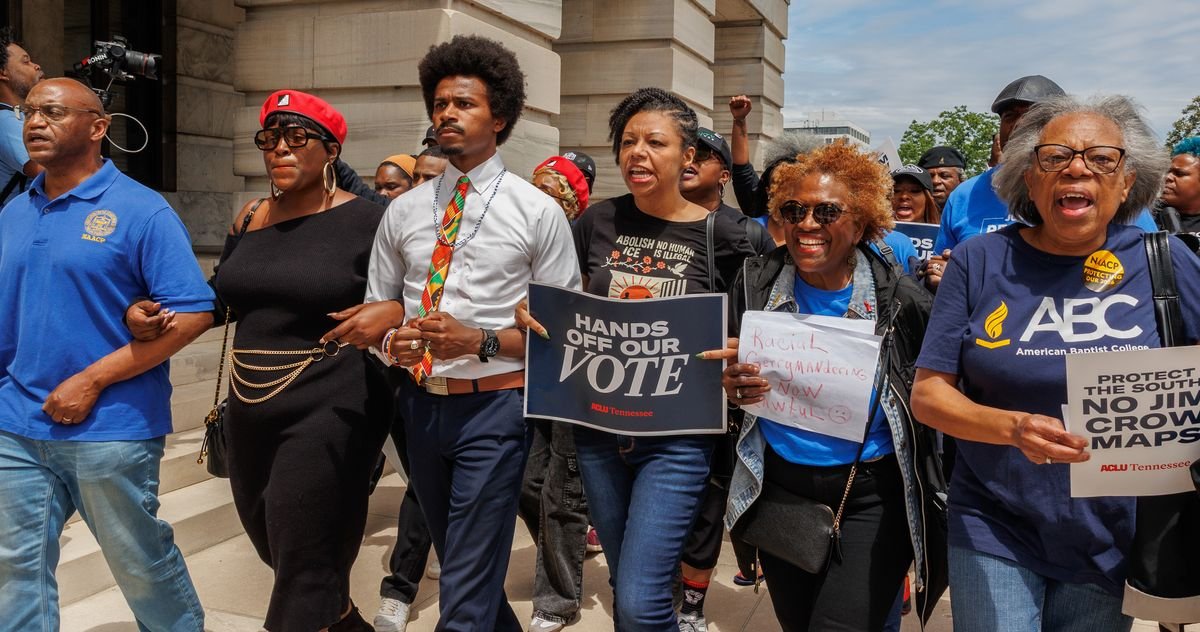
Then the Callais decision dropped on April 29. The 6-3 majority of the Court did nothing to delay its implementation until after the current election cycle. Indeed, the Court waived its customary 32-day pause before making decisions final, thereby ensuring states could race to implement it right away, as Justice Ketanji Brown Jackson noted in an angry dissent from the order. As a result of this hit-and-run attack on long-settled voting-rights principles, a mid-election gerrymander wiping out a majority-Black and Democratic-held congressional district has already happened in Tennessee; is all but certain to happen in Louisiana, Alabama, and South Carolina; and could yet happen in Mississippi.
In Louisiana, early votes in the primary suspended by Governor Jeff Landry had already been counted. Mississippi’s primaries are over, but the results could be reversed. This is all a stunning departure from past procedure. And in combination with two other events — a major Florida gerrymander executed on the very day Callais dropped and a 4-3 Virginia high-court decision overturning a voter-approved Democratic gerrymander — the Supreme Court has given the GOP a huge political gift that could keep that party in total power in Washington for the next two years even if Democrats win the U.S. House and national popular vote in November.
So why the rush to judgement on a decision the Court could have easily deferred until the end of the term in June or July, as it usually does with landmark cases like Callais? As Georgetown law professor Stephen Vladeck observes, it is hard to avoid the impression that the conservative Court majority wanted to help the party that put it on the bench to begin with:
The current chaos is a direct result not just of the timing of the merits decision in Callais, but of the Court’s technical order agreeing to issue the judgment immediately last week. That intervention was understood — by everyone — as the justices signaling their willingness to have Callais go into effect this cycle, even though the Court could easily have structured and timed its ruling to prevent exactly that result. Again, back to Justice Jackson’s dissent from the judgment order, what we’re seeing play out in front of us is the result of a choice on the Court’s part. One can think Callais was rightly decided and still think the Court should’ve both anticipated and taken steps to avoid these immediate consequences.
There are two possible counterarguments to this allegation of bald judicial partisanship. The first is that because the Callais decision construed the longstanding interpretation of the VRA as violating the 14th and 15th Amendments, fundamental rights were at issue, requiring immediate protection. To put it less technically, perhaps Callais author Samuel Alito felt the white Republicans of the Deep South could not wait a single moment longer to be liberated from the horrific injustice of being represented by Black Democrats in Congress and in state legislatures. That sounds shocking to anyone who has a passing acquaintance with the history of Jim Crow and the rationale for the enactment of the VRA in the first place. But the idea that southern white folks have been victims of race-based voter discrimination is deeply embedded in the logic of Callais. A second possibility (that’s harder to discern without omniscience) is that Alito and his allies were ready to hand down their frightful decision earlier this year but were delayed by foot-dragging from the three liberal dissenters. From that point of view, it’s outrageous that southern legislatures did not have the luxury of plenty of time to decimate Black representation in Congress and in their own chambers.
In any event, the chaotic unfolding of the Court’s handiwork may or may not decisively affect the midterms, meaning that its full impact (e.g., additional gerrymandering in Alabama and Louisiana and in states like Georgia and perhaps Mississippi, where Republicans missed their chance this year) will not be understood for a year or two. But the unseemly haste with which the Supreme Court blew up voting-rights doctrines that had strong bipartisan support until very recently will place an exclamation point on the Robert Court’s — and the GOP’s — drive to turn back the clock and make Congress a white-folks club.